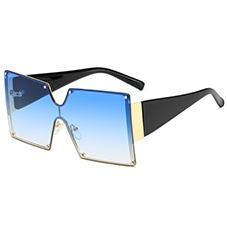
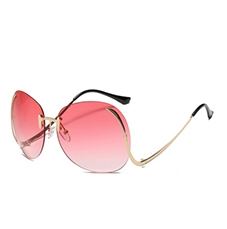
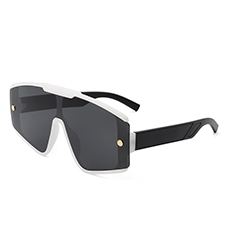
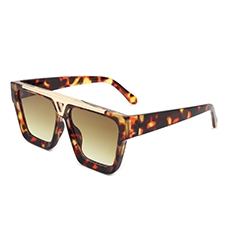
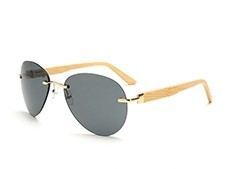
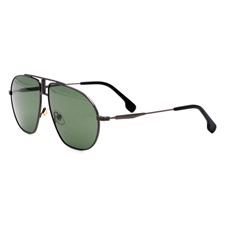
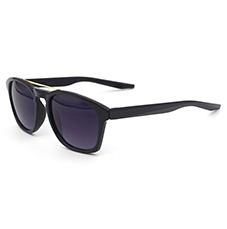
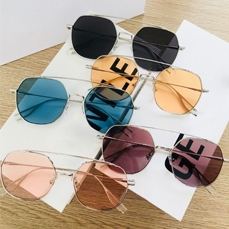
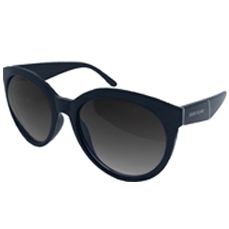
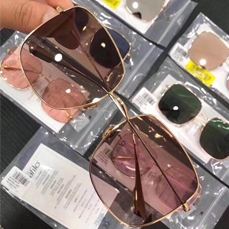
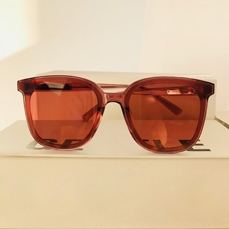
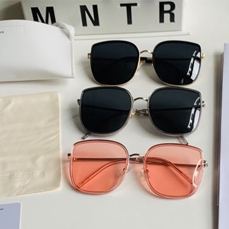
Alibaba.com store
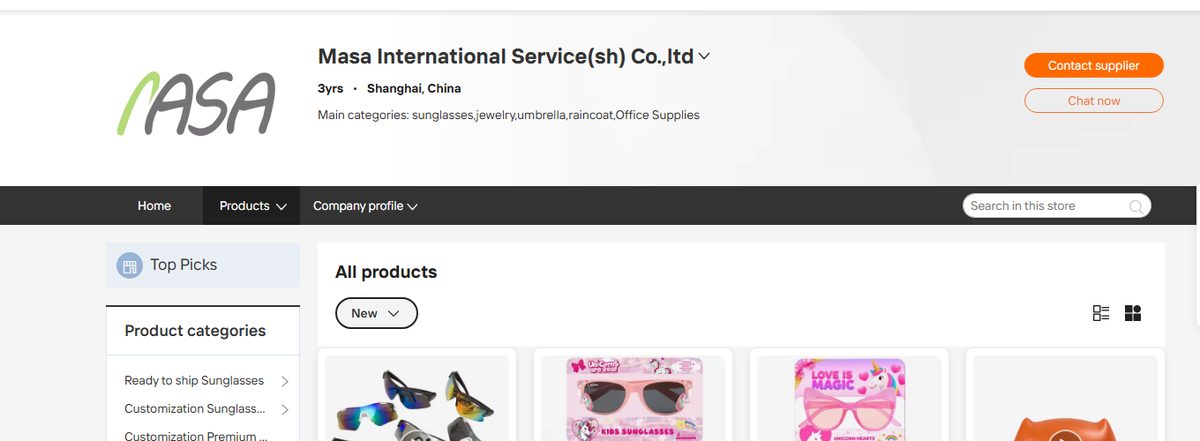
The MASA sunglasses store on Alibaba.com
Masa International Service (sh) Co., Ltd · Shanghai, China · supplier on Alibaba.com since 2021
 Open the store ↗
Prices, minimum order quantities and lead times for the whole sunglasses range are published on our Alibaba.com store, so buyers can compare models and order directly. Buyers who prefer to work through MASA can send a specification instead — the same product, quoted by our own Shanghai office with sampling, inspection and shipping handled in-house.
Sunglasses & Ski Goggles Sourcing Service
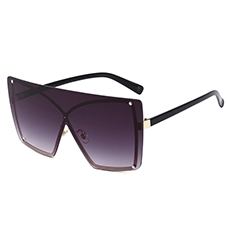
MASA Development International helps retailers, importers and promotional buyers source sunglasses and ski goggles directly from certified factories in China. Our range covers fashion sunglasses, sport sunglasses, polarized lenses, kids sunglasses, ski goggles and snowboard goggles, with full support for OEM designs, custom logos, lens coatings and retail-ready packaging.
With sourcing offices in Shanghai and Yiwu, we audit every factory for quality systems and compliance before production, and coordinate samples, inspection and shipment so your eyewear program arrives on schedule. Whether you need seasonal promotion volumes or a private label eyewear collection, our team provides responsive quotations and factory-matched solutions.
Frames, Lenses and Coatings
Eyewear is specified by material, not by shape. Frames are quoted in acetate, TR90, polycarbonate or metal, and each choice changes tooling, weight and finish. Acetate gives the depth of colour and polish that fashion accounts ask for; TR90 and polycarbonate suit sport and promotional programmes where flexibility and low weight matter more than surface finish.
Lenses are quoted by material and by coating stack: polycarbonate or TAC with UV400 protection, mirror or gradient finishes, and anti-reflective layers where the buyer's market expects them. Lens category is stated per SKU, because category 3 is the normal sunglasses grade while ski goggles are specified to the light conditions they are intended for.
Ski and Snowboard Goggles
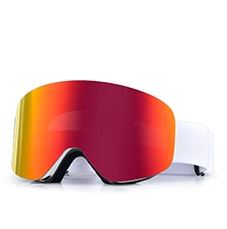
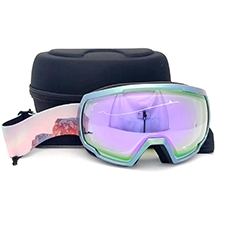
Goggle programmes are decided by lens geometry and sealing. Cylindrical lenses are the cost-effective option and cover most retail price points; spherical lenses cost more and are chosen for optical performance and premium positioning. Double-lens construction with an anti-fog coating is the baseline, and single-lens goggles should be treated as a promotional-only build.
The frame is TPU for flexibility at low temperature, and the foam is multi-layer so that it seals without pressure points. Strap length, buckle type, ventilation path and over-the-glasses fit are all confirmed on a physical sample, because these are the points that generate returns.
Branding, Logo and Retail Packaging
There are four practical branding routes: printing or hot-stamping on the temple, etching or printing on the lens, a metal logo insert, and a custom frame mould. The first three sit on standard tooling and carry modest setup cost; a custom frame mould is a programme-level investment and is only worth it above a defined annual volume.
Retail packaging is quoted alongside the product: microfibre pouch, semi-hard case or hard case, cleaning cloth, hang tag and counter display. Display units are frequently the difference between a listing and no listing in optical and gift channels, so they are specified at quotation stage rather than added later.
Eyewear Standards and Claim Substantiation
Sunglasses are regulated as personal protective equipment in several markets. Test protocols such as EN ISO 12312-1 and ANSI Z80.3 cover transmittance, optical quality and impact resistance, and any UV400 or polarised claim should be backed by a test report rather than by the lens supplier's word.
Metal frames are checked for nickel release where the destination market requires it, surface coatings are screened against restricted substances, and textile or leather elements such as pouches are reviewed for labelling and chemical limits. We collect the report set for the buyer's market before production rather than testing a finished shipment.
Sampling Waves and Lead Time for Eyewear
Frames in existing tooling are quoted per colour and per lens, and the MOQ is set by the plating or coating batch rather than by assembly. This is why an eyewear MOQ is usually expressed per colourway: four colours of one frame often mean four minimums unless the buyer accepts a mixed-colour run.
Sample lead time for an existing frame is short, typically one to two weeks, while a new mould adds several weeks for tooling plus a fit-and-finish round. Counter-samples are photographed with the lens category, coating and branding stated so the buyer's approval is unambiguous.
Eyewear Packing and Carton Planning
Eyewear is low-volume and high-value, so carton loading is rarely the constraint; packaging protection is. We confirm whether the buyer needs pouch-only packing for e-commerce, box-only packing for retail, or a mix, and we check that the packed unit survives the parcel journey the buyer actually uses.
Master carton quantity, shipping marks and barcode placement are confirmed before production. Where a programme mixes several frames and colours, carton packing is planned by SKU so that distribution centres can receive without repacking.
Sunglasses & Ski Goggles Sourcing Questions
Do you produce prescription or reading eyewear?
The programmes we coordinate are sunglasses and sport goggles, including polarised and mirrored lenses, ski and snowboard goggles. Reading and prescription eyewear involve different tooling and medical-device requirements and are handled as a separate project if required.
What is a typical MOQ for sunglasses?
MOQ is usually set per colourway by the coating or plating batch rather than by frame assembly, so a four-colour programme often carries four minimums. Existing frames can be run at lower volumes than a new mould, which amortises tooling across the order.
Can you put the buyer's logo on the lens and the temple?
Yes. Temple printing, hot stamping, lens etching and metal logo inserts are all available on standard tooling. Each method has its own setup cost and artwork requirement, which we confirm before the order is placed.
How do we verify a UV400 or polarised claim?
Claims are supported by test reports from an accredited laboratory covering transmittance and optical performance for the destination market, for example EN ISO 12312-1 or ANSI Z80.3. Reports are collected before production rather than after shipment.